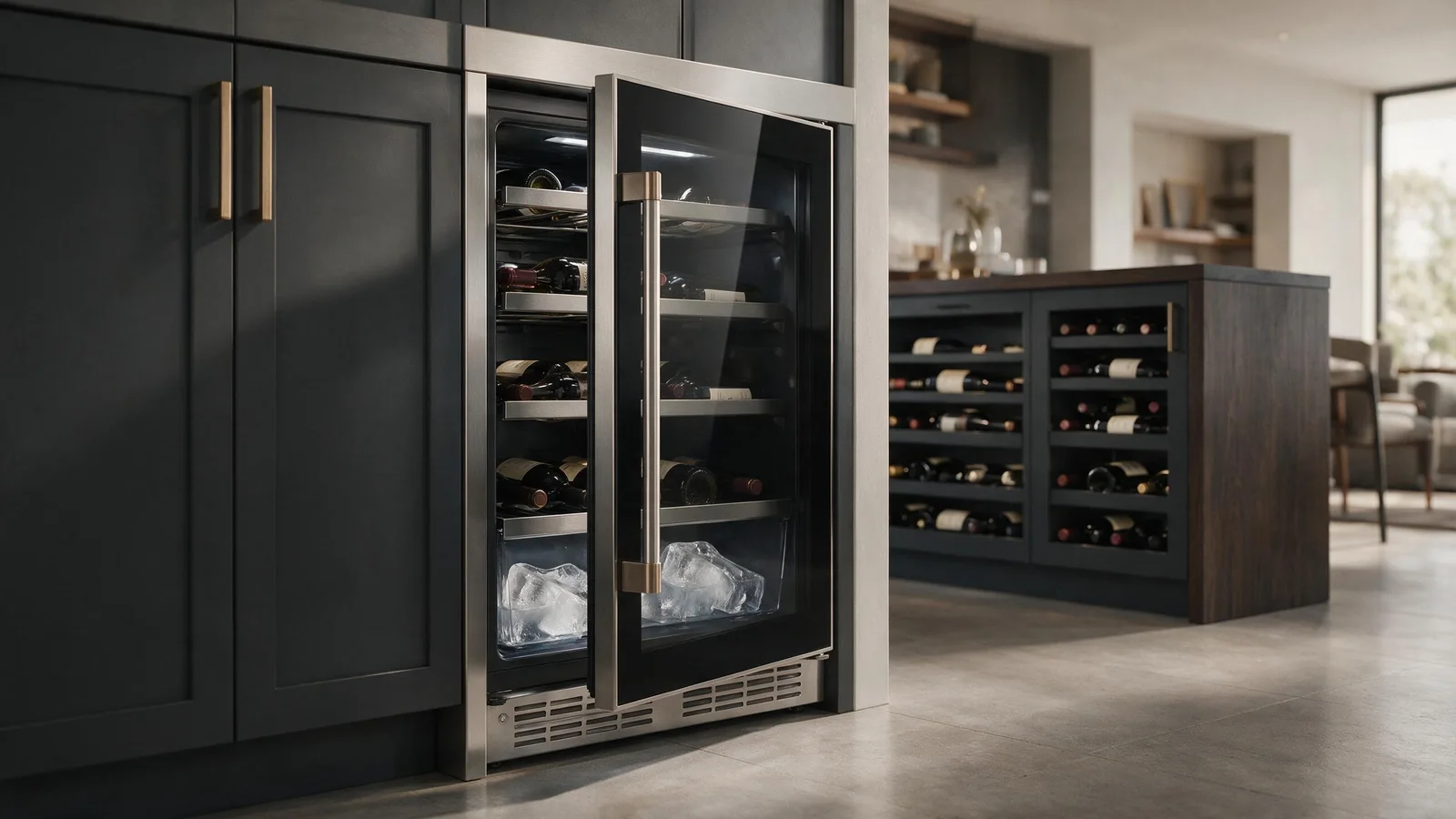
Start with the basics: does the door seal and close fully, are bottles blocking the air paths, and did a long door-open period or a power event come before the warmth? Record the temperature over time instead of trusting one reading. If it stays warm, book service.
When a JennAir appliance changes behavior, the fastest route to a useful answer is usually to document the pattern before trying to force the appliance back to normal. The practical goal is to record temperature trend, door sealing, load, airflow and ambient conditions rather than relying on one momentary reading. This guide focuses on observations a homeowner can make safely and on the information that helps a model-specific diagnosis.
Even within the topic of “JennAir Wine Refrigerator Too Warm,” two JennAir appliances that look related may use different controls, sensors, or installation details. Capture the exact model identifier first, then document the symptom as an observation. Note the timing and repeat pattern, including the appliance behavior just before the issue and immediately afterward.
When a code or flashing indication accompanies “JennAir Wine Refrigerator Too Warm,” preserve it before any control changes. Do not separate a short code from the model and product family that produced it.
These checks are intentionally external. They are meant to improve the diagnostic record, not to turn a homeowner into a service technician.
For “JennAir Wine Refrigerator Too Warm,” repeatability helps turn a vague complaint into useful diagnostic evidence. Write down whether the issue appears immediately or after the appliance has run for a while, and whether a reset changes it only temporarily. Differences between modes, zones, compartments, and cycles can help distinguish control behavior from mechanical, airflow, water, heat, or power concerns.
Do not use “JennAir Wine Refrigerator Too Warm” as evidence that one named part has failed. A technician may need to test connections, sensors, controls, loads, and installation conditions before the cause is confirmed.
Do not assume a reset is universal for “JennAir Wine Refrigerator Too Warm”; follow the owner-level procedure only when the exact product guidance supports it. Reset intervals vary between appliance families, so do not borrow timing from another product. If the symptom or code returns right away, preserve the evidence and stop repeating the reset.
A reset is not a safety response for smoke, burning odor, active water near electrical parts, gas odor, arcing, uncontrolled heating or a breaker that trips repeatedly.
In “JennAir Wine Refrigerator Too Warm,” stop troubleshooting and discontinue use if there is smoke, visible arcing, a burning-electrical smell, repeated breaker trips, persistent gas odor, uncontrolled heat, or water reaching electrical parts. Microwave door and interlock damage should not be worked around. Homeowner troubleshooting should not extend to energized components, gas connections, sealed refrigeration systems, or internal microwave high-voltage assemblies.
For “JennAir Wine Refrigerator Too Warm,” professional diagnosis should first verify the model, installation context, and reported symptom. From there, appropriate measurements and the model-specific service path can be used before parts are ordered. A clear diagnosis is more useful than naming several parts that might be involved.
For an integrated unit related to “JennAir Wine Refrigerator Too Warm,” advance access information—cabinetry, panels, ventilation, and utility connections—can prevent avoidable delays at the visit.
Have the following ready:
Before service for “JennAir Wine Refrigerator Too Warm,” collect the model number, symptom timeline, codes or flashing indications, relevant recent changes, photos that show the condition, and location/access information for the installation.
Use the related appliance or service page, then submit the model number, symptom, code and service ZIP through the booking form if the issue persists.
For the cooling issue in “JennAir Wine Refrigerator Too Warm,” record duration and compartment behavior. Short-lived warmth after heavy door use is not the same as a persistent temperature problem; protect perishables whenever food safety may be at risk.
Installation context can change the diagnostic path. Built-in appliances may have panel kits, ventilation clearances, electrical connections, water lines, gas connections, or cabinetry constraints that matter before the appliance can be accessed safely. Share those details when booking instead of waiting until the visit. With JennAir Wine Refrigerator Too Warm, preserving those details gives the diagnostic process a clearer and more model-aware starting point.
A display message is evidence, not a guaranteed parts diagnosis. The same short code can be used differently across product families or generations, so the full model number should remain attached to every error-code note. If a reset temporarily clears the message but the symptom returns, keep the original code in the service record. For JennAir Wine Refrigerator Too Warm, clear model and symptom notes also reduce the chance of applying instructions from the wrong product family.
Homeowner troubleshooting should stay at the observation and user-accessible level. Do not remove service panels, bypass interlocks, open microwave high-voltage sections, disturb a sealed refrigeration system, or work on live gas or electrical connections. Those steps require appropriate training and test equipment. With JennAir Wine Refrigerator Too Warm, preserving those details gives the diagnostic process a clearer and more model-aware starting point.
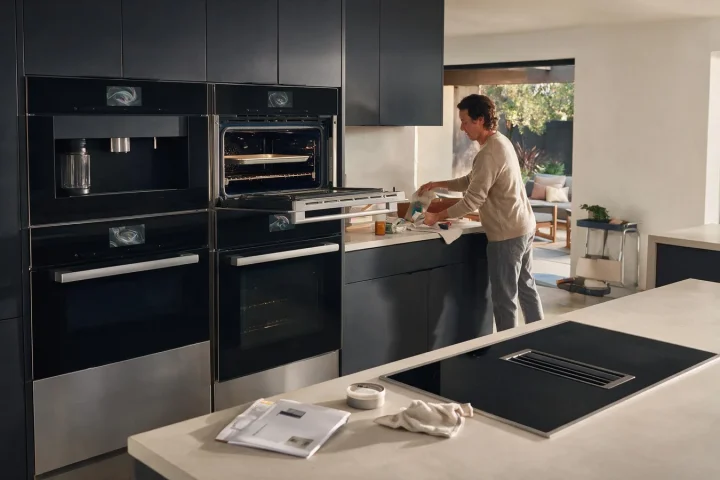
When the appliance is part of a premium integrated kitchen, access planning matters almost as much as symptom description. Custom fronts, stone overhangs, adjacent panels, tight toe-kicks, and stacked installations can affect the time and method needed to reach service components without damaging surrounding finishes. For JennAir Wine Refrigerator Too Warm, clear model and symptom notes also reduce the chance of applying instructions from the wrong product family.
Before authorizing a repair, ask for a clear explanation of the measured fault, the proposed repair, and any uncertainty that remains. A responsible diagnosis should distinguish a confirmed failed part from a suspected pathway and should not treat a single display code as automatic proof of a particular component. With JennAir Wine Refrigerator Too Warm, preserving those details gives the diagnostic process a clearer and more model-aware starting point.
A useful diagnostic record separates what the appliance actually did from what someone expected it to do. Note the sequence, timing, sounds, display changes, temperature changes, water behavior, and whether the issue is constant or intermittent. That information is more valuable than guessing a component before testing begins. For JennAir Wine Refrigerator Too Warm, clear model and symptom notes also reduce the chance of applying instructions from the wrong product family.
Not reliably. A symptom is evidence, but model-specific measurements are needed before deciding whether the cause lies in controls, sensors, wiring, a mechanical load, or the installation.
No. Once the symptom returns, preserve the code or behavior instead of repeatedly clearing it.
Gather four things before the visit: the full model number, a plain description of the symptom, any code or message you saw, and clear…
A message on a JennAir beverage center depends on its control platform, so the exact wording and the model number matter more than a…
PO on an applicable JennAir built-in refrigerator is a power-outage indicator. It appears after the power was interrupted and the freezer temperature rose. Acknowledge…
Share a few details and we’ll confirm an appointment. Prefer to talk? Call us and we’ll help right away.
Use the secure scheduler below to request your appointment.